Bauhaus and Art Deco in a 2026 Villa: Proportion, Material and Light
Homeowners and designers planning a villa interior often ask which room should follow Bauhaus logic and which should follow Art Deco. Antonovich Group, the top interior design company in dubai, has designed Dubai villas for more than 20 years and builds the joinery and furniture in-house, so the choice between these two movements gets made with the actual materials on the table. The answer starts with what each movement originally asked of proportion, material and light.
The two vocabularies pull in opposite directions. Bauhaus designers shaped every opening and surface by use and by industrial production. Art Deco makers served wealthy clients with hand-finished surfaces. A villa works best when each room takes one vocabulary and keeps it, instead of blending both into a single undefined look.
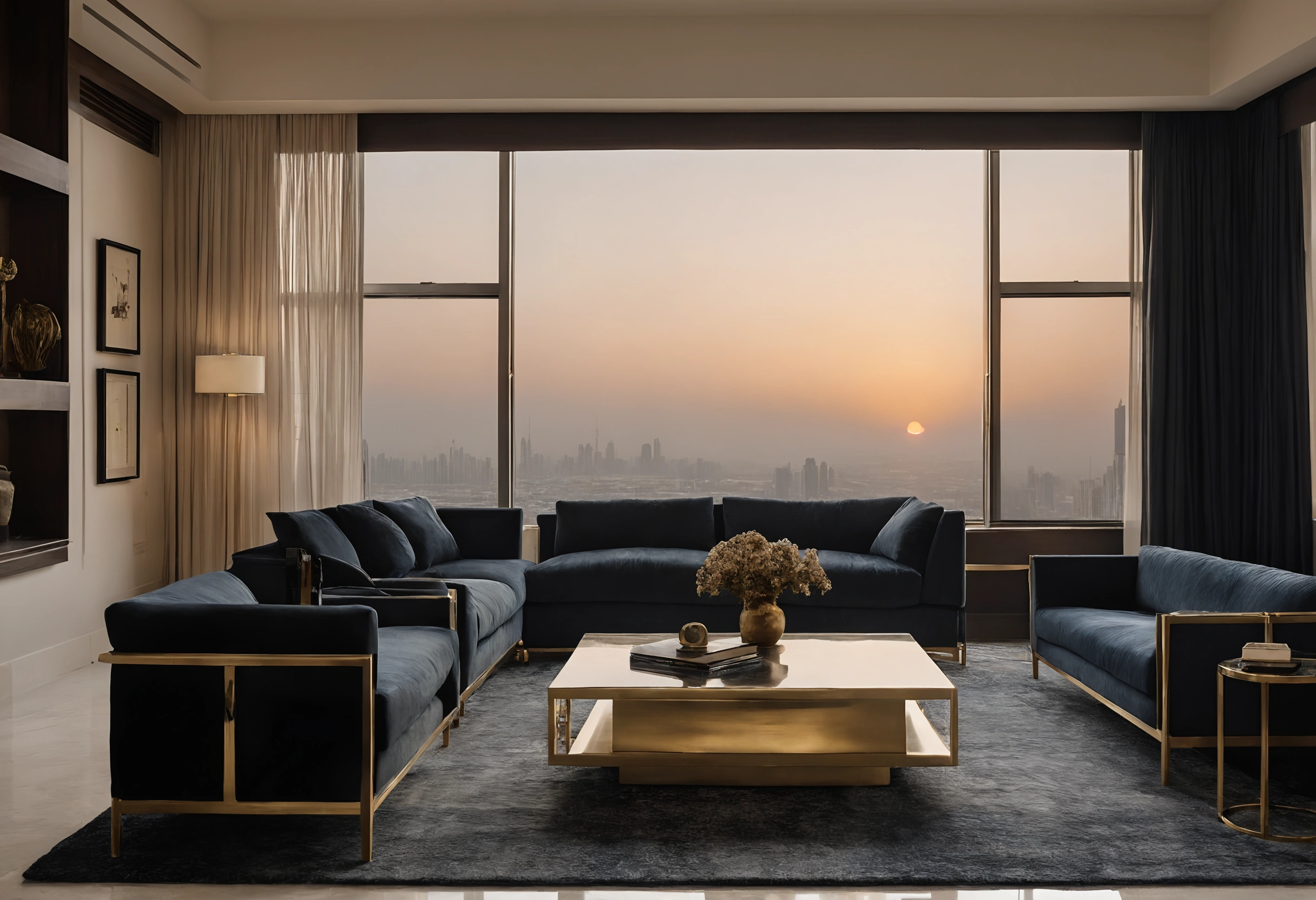
- Give studies, kitchens and utility rooms the Bauhaus treatment: openings sized to the task, plain surfaces, metal furniture.
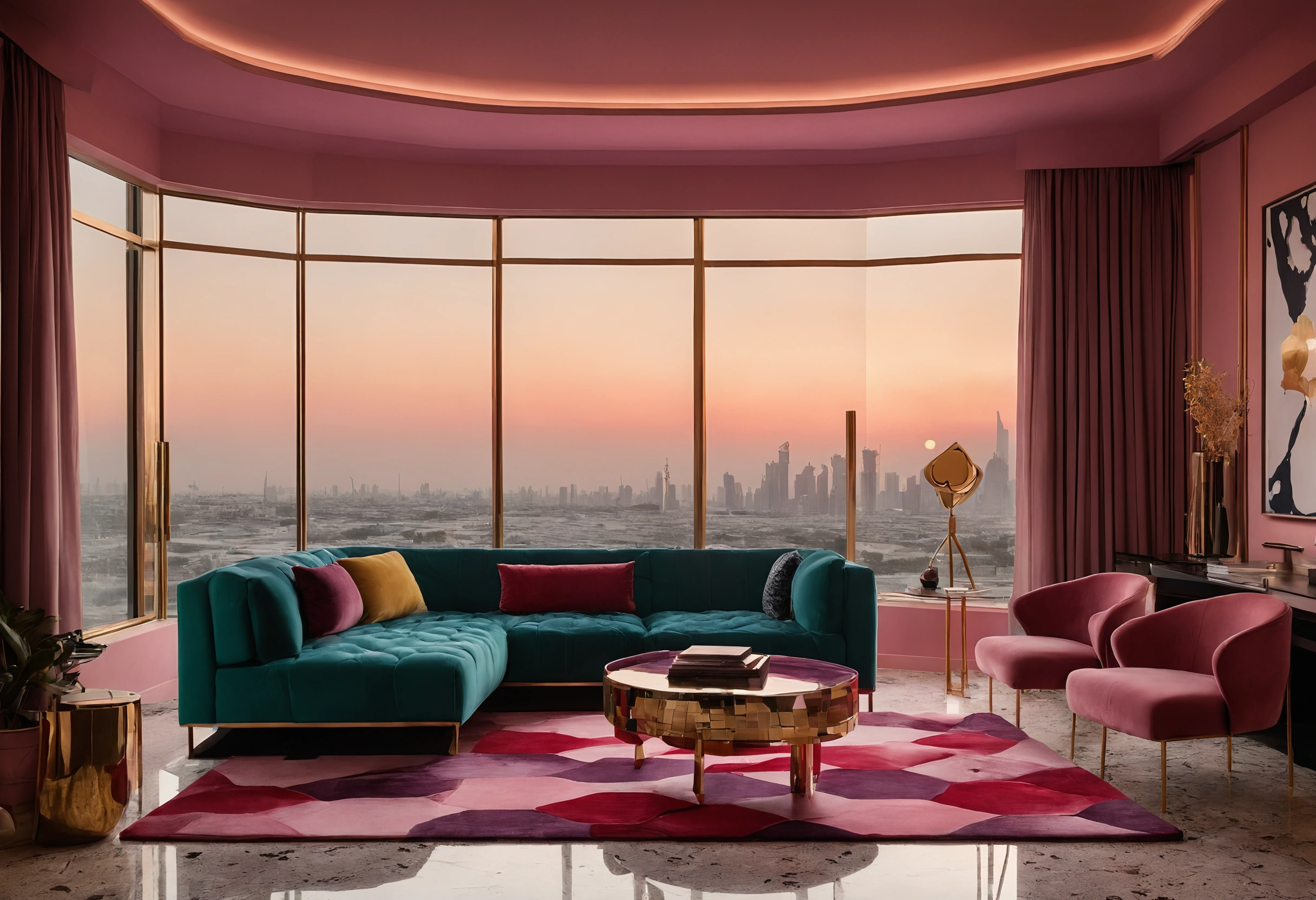
- Give reception rooms, dining rooms and entry halls the Art Deco treatment: lacquer, veneer and patterned glass.
- Choose one metal and one glass strategy per room before choosing color.
- Add warmth to Bauhaus rooms through textile and light, not through ornament.
How did the Bauhaus set the size of an opening?
Use set the size. In the Dessau school, the V&A explains, each building was shaped by its function: teaching rooms received rows of small windows, while workshops and studios were lit by walls of glass. A villa can follow that rule: a modest window over a desk, full-height glazing where the living room meets the garden.
The Bauhaus Dessau Foundation describes the Bauhaus Building, opened on 4 December 1926, in terms a homeowner can borrow. Gropius chose high-quality crystal mirror glass to prevent distortion. The steel and glass facade could be drawn around the building like a curtain. Color was an important component of the building’s concept, worked out by the mural painting workshop under Hinnerk Scheper. Marianne Brandt, Hans Przyrembel and Max Krajewsky designed the lamps, and Gropius drew the door handles himself. The building joined the UNESCO World Heritage List in 1996.
Which Bauhaus materials work inside a villa?
Tubular steel and plain glass carry the look. The Bauhaus Dessau Foundation notes that the Bauhaus Building has a reinforced-concrete load-bearing structure and that steel and aluminum were the preferred metals for the school’s lamps and furniture. Cooper Hewitt credits Breuer with the original tubular steel chair of 1926, inspired by his bicycle’s frame. His company Standard-Möbel followed in 1927 and passed to Thonet in 1928.
Cooper Hewitt also records the underlying principle: Bauhaus design favored simplicity and economy of form and material. In practice, a Bauhaus room needs few materials, each used honestly. Chrome or steel frames, glass tops, a single wall color and focused task lighting do the work. The V&A adds a warning from the period: critics called the white, flat-roofed results stark and found glass walls a poor shield against the elements. In a Gulf villa, that means shaded glazing and warmth from textiles.
What did Art Deco ask of material and finish?
Art Deco asked for surface richness. The V&A’s poster record for the 1925 Paris exhibition counts about 15 million visitors and around 15,000 exhibits, and notes that the name Art Deco was coined in the 1960s from the exhibition’s title. In the 1920s, the V&A explains, makers produced bespoke one-offs for the wealthy few, and Ruhlmann was best known for elegant lines and exotic wood veneers.
Lacquer was the other signature finish. The V&A points out that lacquer could be applied to wood, metal, leather and textiles, and names Eileen Gray, who learned the technique from the Japanese craftsman Sugawara Seizo, as one of its key champions. Her c.1923 screen layers thin coats of lacquer with silver leaf, sand and gravel. By the 1930s the V&A records a shift to chromed steel, aluminum, mirror, colored glass and new plastics, replacing exotic woods, ivory and sharkskin. A villa can borrow either decade: veneer and lacquer for a warm dining room, mirror and chrome for a lighter entry hall.
How did Art Deco handle light and glass?
Art Deco treated glass as ornament that shapes light. The V&A describes Lalique’s style as a contrast between clear and frosted glass, with patinas, enamels or stained glass added for decorative effect. Frosted areas soften a light source and clear areas pass it through. Lalique also added a range of colors to his commercial lines after 1925.
In a villa, a frosted and clear glass screen between an entry hall and a dining room does what a Bauhaus wall of glass cannot: it divides a space and glows at night. Bauhaus light is architectural and direct, from windows and task lamps. Art Deco light is decorative and diffused, from patterned panels and fittings. Mixing the two in one room produces glare beside glow. Assign each room one lighting character.
Which rooms of a villa suit each movement?
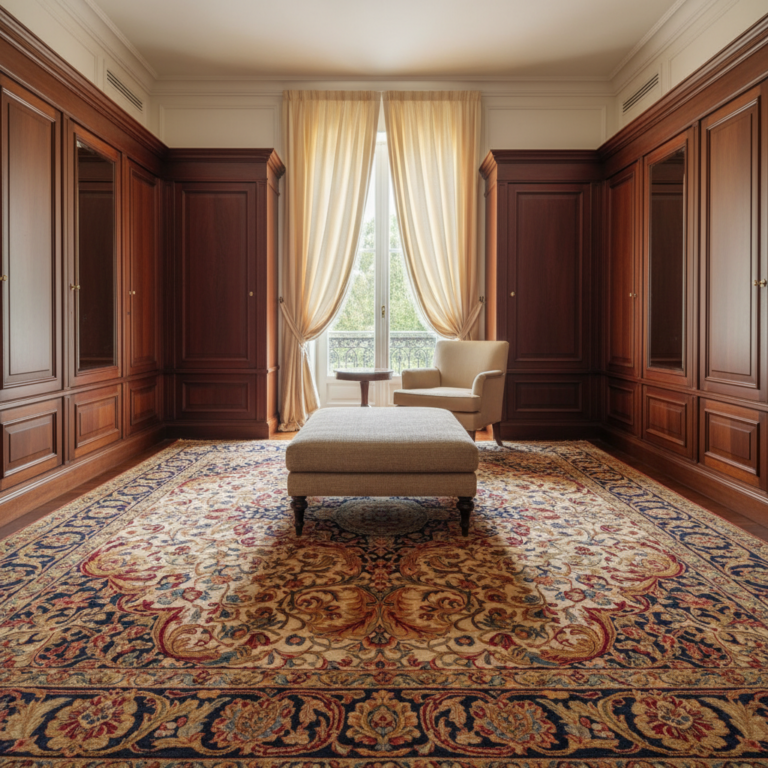
Bauhaus suits rooms where work happens: home offices, kitchens, laundry and utility spaces, and corridors that connect them. Art Deco suits rooms where people are received: majlis-style sitting rooms, dining rooms, the entry hall and the primary suite. Formal rooms also depend on the right carpet scale and knot density, which suits lacquer and veneer far better than a bare steel-and-glass look.
Structure sets the limits. A concrete-framed villa accepts large glazed openings in the wings where the plan is open, and keeps enclosed volumes for lacquered joinery. Before ordering glass, check the load path and the sequence of works, as covered in villa renovation discipline. For a broader view of how one cultural tradition carries bold surfaces without losing coherence, read modern Nigerian luxury.
What separates the two movements on a specification sheet?
Seven points separate the movements, from the size of openings to the finish on a chair frame. Use the table to assign one value per room: pick a column, hold it, and keep the other movement out of that room.
| Principle | Bauhaus | Art Deco | Source |
|---|---|---|---|
| Form and openings | Shaped by function; window size follows use | Geometric forms in repeat patterns | V&A |
| Materials | Reinforced concrete, steel, glass | Exotic wood veneers and ivory in the 1920s | Bauhaus Dessau Foundation |
| Furniture | Tubular steel frames, economy of form | Bespoke pieces with exotic veneers, elegant lines | Cooper Hewitt, V&A |
| Metal | Steel and aluminum | Chromed steel and aluminum in the 1930s | Bauhaus Dessau Foundation, V&A |
| Finish | Color planned as part of the building concept | Lacquer on wood, metal, leather or textile | Bauhaus Dessau Foundation, V&A |
| Glass and light | Distortion-free crystal glass, designed task lamps | Clear against frosted glass, enamel and stained accents | Bauhaus Dessau Foundation, V&A |
| Risk in a villa | Stark, cold rooms and exposed glass | Bespoke one-offs for the wealthy few | V&A |