How Large Carpets Are Specified: Scale, Knot Density, and Visual Calm in Formal Rooms
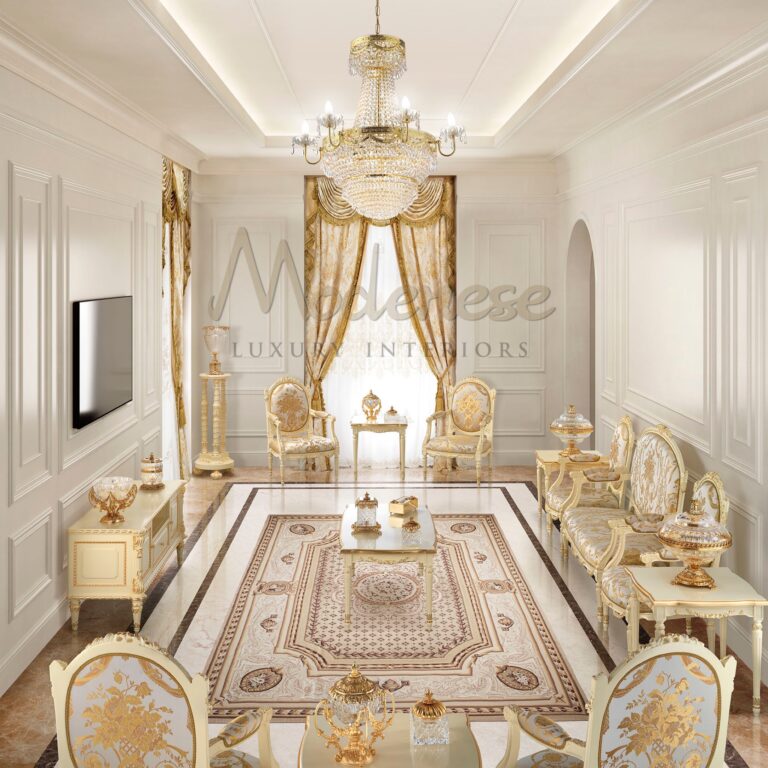
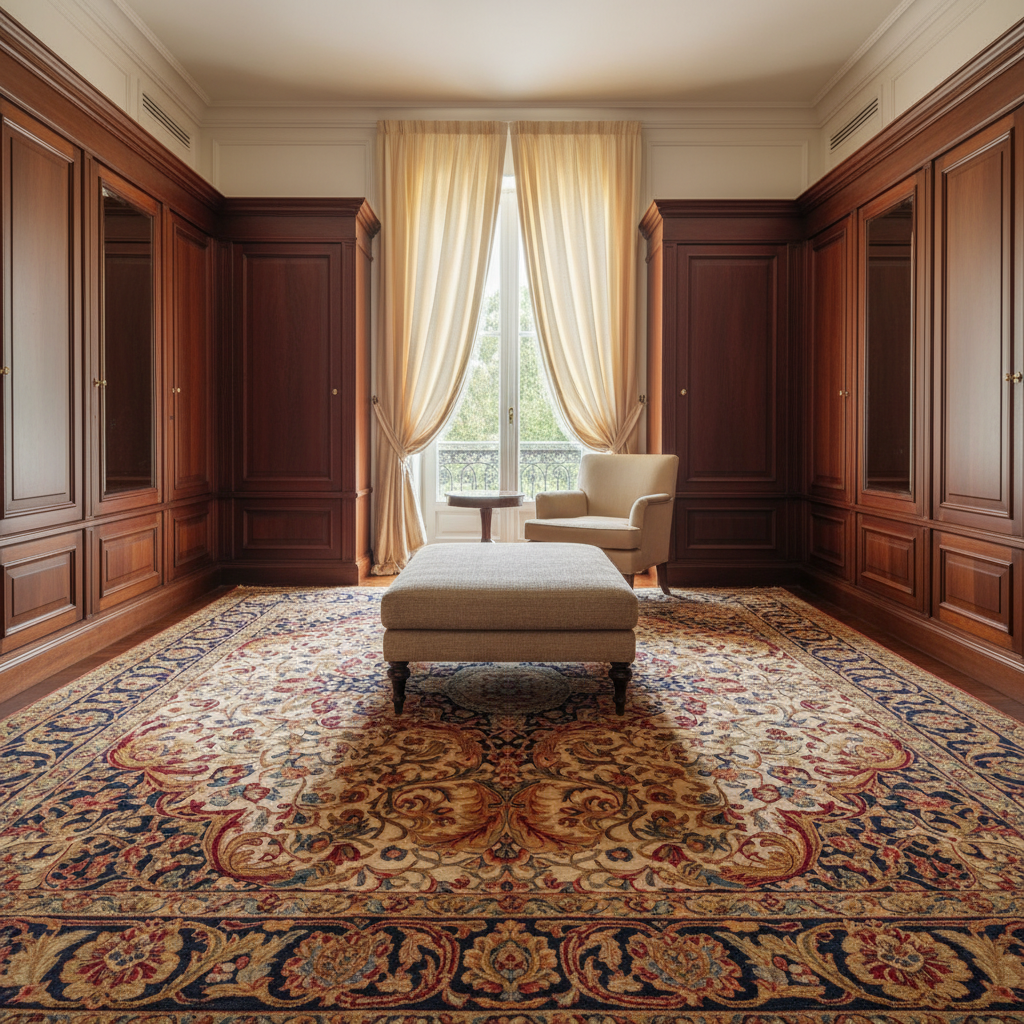
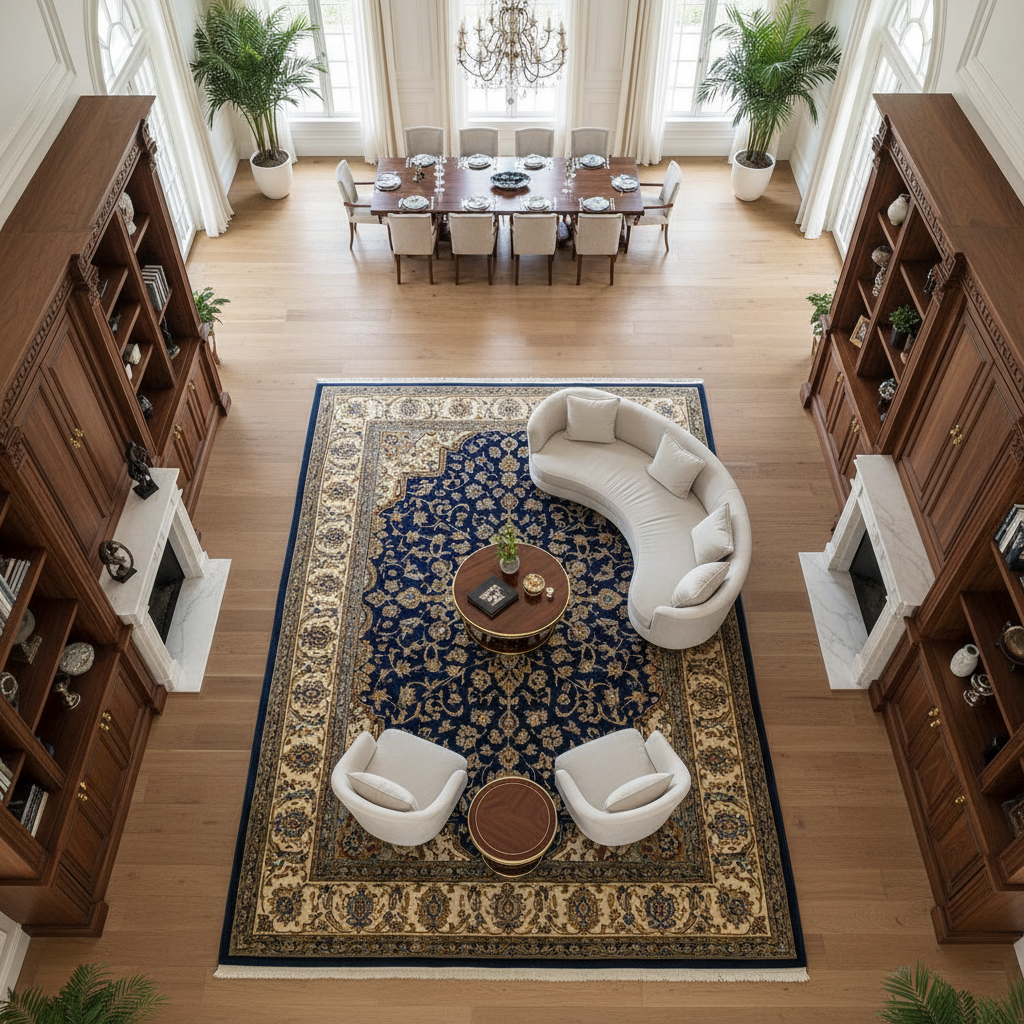
italian rugs matter most when a room is large enough for mistakes in scale to become impossible to ignore. Small rugs in large formal interiors make the furniture look temporary and the circulation feel fragmented. Oversized rugs do the opposite. They slow the room down, create visual calm, and let the architecture read as one composition instead of several disconnected zones.
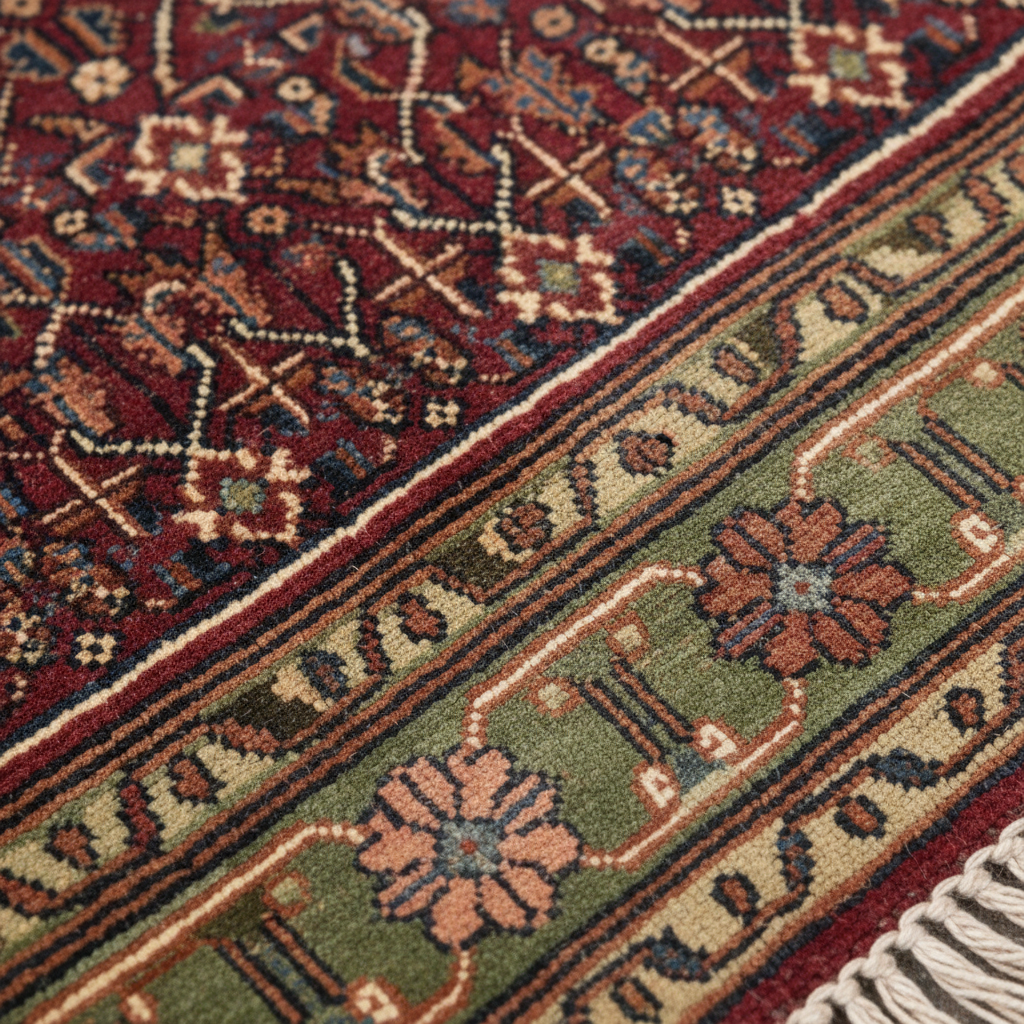
The Victoria and Albert Museum’s writing on the Ardabil Carpet gives a useful benchmark for what density and scale can mean in practice. The museum notes that the carpet dates to 1539-1540, has about 5,300 knots per ten square centimetres, and may have involved up to 10 weavers. Those details do not tell a designer what to buy today, but they do show that knot density, labor, and visual precision were linked from the start. Source: V&A, The Ardabil Carpet.
In contemporary rooms, scale comes first. A large rug field allows the eye to settle. That is especially valuable in dressing areas, wardrobe lounges, and reception rooms where cabinetry, mirrors, and lighting already provide enough visual activity. The rug should reduce visual fragmentation, not add to it.
The Bullerswood Carpet conservation report adds another practical point. The V&A describes it as 4 by 7.6 metres, with cotton warp, jute weft, and woollen pile. Those dimensions matter because they remind designers that large-format carpets are architectural elements, not accessories. Once a rug reaches that scale, its material structure affects handling, maintenance, and how the room is used. Source: V&A, The conservation of the Bullerswood Carpet.
Woolmark’s guidance on wool’s breathable behavior helps explain why wool-rich rugs remain strong interior choices in high-use rooms. Wool can absorb substantial moisture without immediately feeling wet, and its crimped structure supports resilience under use. In formal rooms that are actually lived in, resilience is not secondary. It is part of what keeps a room elegant after years of traffic. Source: Woolmark, Wool is naturally breathable.
The practical specification sequence is simple. First set the rug perimeter in relation to the room, not to the smallest furniture grouping. Then decide whether the border should frame the architecture or disappear into it. Then decide whether density should push the rug toward crisp pattern or toward a more atmospheric field. Large formal rooms usually benefit from calmer fields than sample books suggest.
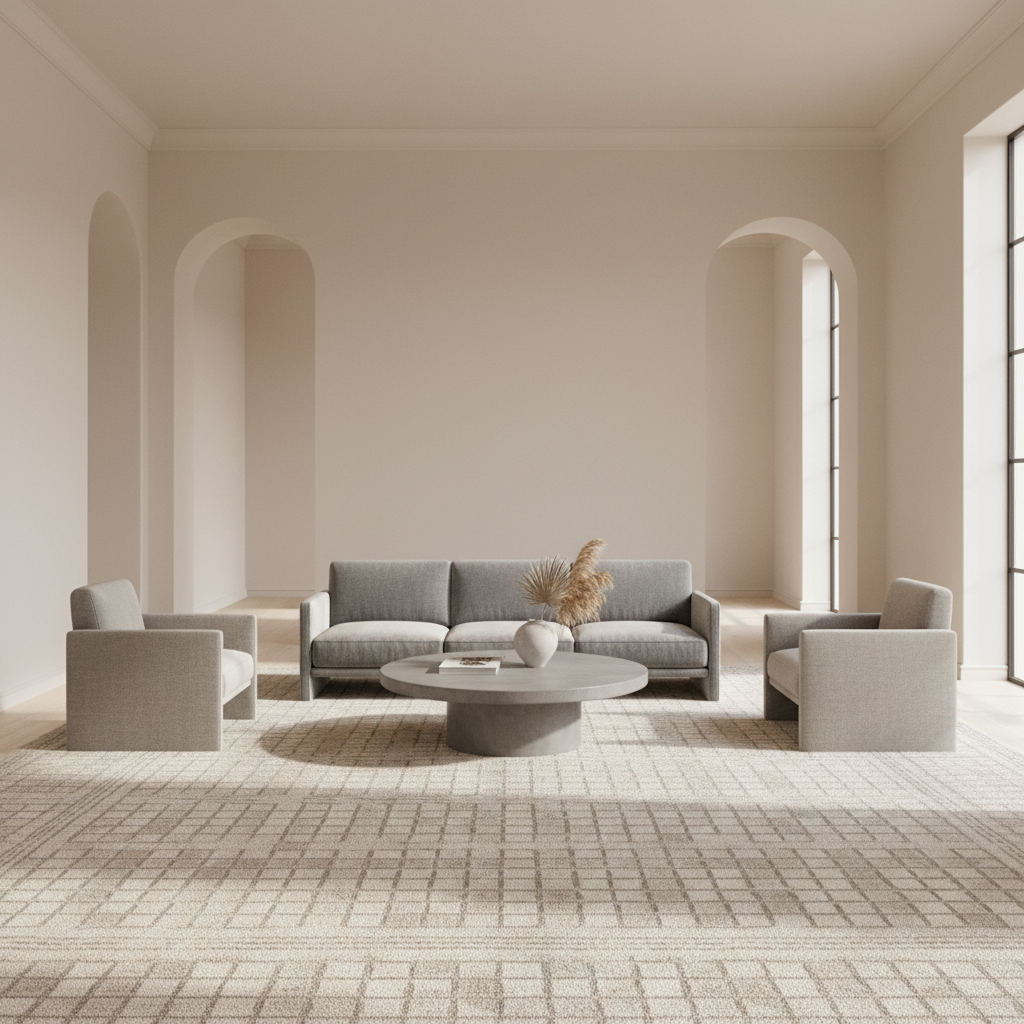
That is where visual calm comes from. Not from empty space, but from scale that is confident enough to unify the room. The best large carpets do not ask for attention every second. They hold the room together and let everything above them look more intentional.